

How to Remove Links From a Watch Bracelet
Why trust this guide? It's written by the Watch Direct team, an authorised Australian watch retailer trading since 2011. The steps follow published guidance from watch specialists and from the manufacturers themselves, including Casio's own advice on bracelet adjustment.
This guide covers general steps for common bracelet types. Your watch's manual and warranty terms take priority, so check them first.
At a Glance
- Count first, remove second. Wear the watch and fold the spare bracelet to see how many links need to go.
- Check the pin type. Look at the edge of the bracelet: screws, split pins (with arrows on the inside) and pin-and-collar links each come out differently.
- Split the links between both sides. If it's an odd number, take the extra one from the 6 o'clock side.
- Use the right tools. A correctly sized screwdriver or a pin pusher, a soft surface and a tray for small parts.
- Not sure? Get help. Check your warranty first; a jeweller or watchmaker can size most bracelets quickly.
In This Guide
A new metal bracelet almost always arrives too long. Removing a link or two is a simple job once you know what kind of pins your bracelet uses, but it's also easy to scratch a finish or lose a tiny part if you rush. This guide walks you through each step, explains the three common bracelet designs, and tells you when it's smarter to hand it to a professional.
Before you start: should you do it yourself?
Plenty of people size their own bracelets, but check two things first.
Your warranty terms. Some brands say links should only be adjusted by their own service centres. Casio UK, for example, advises that metal bracelets should be adjusted by a trained Casio engineer, and that damage caused when someone else does the work isn't covered by the warranty. Other brands are more relaxed, so read your warranty card.
The value of the watch. On an expensive watch, or a bracelet with a polished or plated finish, one slip of a screwdriver can leave a mark that's hard to remove. That's often worth avoiding.
Bought from Watch Direct?
Bracelet fitting is available at our Marrickville showroom for watches bought from Watch Direct. On busy days and during sales periods, we may ask you to come back later for your fitting. For other watches, a local jeweller or watchmaker can usually size a bracelet quickly.
Tools you need
- A soft, clean work surface such as a folded microfibre cloth on a table, so parts don't roll away and the case doesn't get scratched.
- A precision screwdriver that fits the screw slot exactly (for screw links). Two are handy for bracelets with screws on both sides.
- A pin pusher or link removal tool (for pin links). Inexpensive kits usually include a bracelet holder and several pin sizes.
- A small hammer with a soft head (nylon, plastic or brass) for tapping pins back in.
- Tweezers and a small tray or dish for pins, collars and screws.
- Low-tack masking tape (optional) to protect polished surfaces near where you're working.
Step 1: Work out how many links to remove
- If your clasp has micro-adjustment holes, set it to the middle position first. That leaves you room to loosen or tighten later.
- Put the watch on with the dial centred on top of your wrist.
- Pinch the spare bracelet together under your wrist until it feels comfortable, then count how many links you've folded away.
- Plan to remove that number, split between both sides of the clasp. For an odd number, take the extra link from the 6 o'clock side (the side below the dial).

A good fit lets you slide one finger between the bracelet and your wrist. If you're between sizes, err on the side of slightly loose. Not every link comes out: removable links have a visible screw or pin end on the side, and often small arrows on the inside.

Step 2: Identify the pin type
Look at the edge of a removable link. What you see tells you how it comes apart.

Screw links
How to spot it: A screw slot visible on the side of the link, on one side or both · How it comes out: Unscrew with a screwdriver that fits the slot exactly · Watch out for: Stripped slots and slipping screwdrivers. On double-sided screws, hold one side still while you turn the other
Split pins
How to spot it: A plain pin end on the side, and small arrows stamped on the inside of the link · How it comes out: Push the pin out in the direction of the arrow · Watch out for: Push it back in the opposite direction to the arrow
Pin and collar
How to spot it: Looks like a split pin from the outside, but a tiny tube (collar) sits inside the centre link · How it comes out: Push the pin out over your cloth and catch the collar · Watch out for: The collar is very small and easy to lose. Refit it before the pin goes back in
| Type | How to spot it | How it comes out | Watch out for |
|---|---|---|---|
| Screw links | A screw slot visible on the side of the link, on one side or both | Unscrew with a screwdriver that fits the slot exactly | Stripped slots and slipping screwdrivers. On double-sided screws, hold one side still while you turn the other |
| Split pins | A plain pin end on the side, and small arrows stamped on the inside of the link | Push the pin out in the direction of the arrow | Push it back in the opposite direction to the arrow |
| Pin and collar | Looks like a split pin from the outside, but a tiny tube (collar) sits inside the centre link | Push the pin out over your cloth and catch the collar | The collar is very small and easy to lose. Refit it before the pin goes back in |
Step 3: Remove the links
Screw links
- Lay the bracelet flat, inside facing down, on your cloth.
- Choose a screwdriver whose blade fills the slot. Press down firmly so it can't slip, and turn anticlockwise.
- If both ends have screw heads, hold one still with a second screwdriver while you undo the other.
- Lift out the screw, separate the link, and keep the screw in your tray. You'll need it to reconnect the bracelet.
Split pins
- Find the arrows on the inside of the link. They show the direction the pin comes out.
- Set the bracelet in a holder (or over a gap so the pin has somewhere to go), with the arrow pointing down.
- Line the pin pusher up with the pin and press or tap gently until the pin slides out. Don't force it at an angle.

Pin-and-collar links
- Work over your cloth, because the collar can drop out as soon as the pin moves.
- Push the pin out the same way as a split pin and set the collar aside safely.
- When you reassemble, put the collar back into the centre link first, then insert the pin through it.
Step 4: Reassemble and fine-tune
- Join the bracelet back up with the same pin or screw you removed.
- For split pins, insert the pin against the direction of the arrow and tap it in gently until it sits flush with the edge of the link.
- For screws, tighten firmly, but stop once it's snug. Overtightening can strip the thread.
- Tug gently on the joined links to make sure nothing is loose, then try the watch on.
- Fine-tune with the micro-adjustment holes in the clasp if needed. A spring bar tool moves the bar from one hole to the next.
Store the spare links in a small labelled bag with any leftover pins, screws or collars. You'll want them if your wrist size changes or if you ever sell the watch.
Bracelets without removable links
Not every metal bracelet uses links you take out.
- Mesh bracelets usually have a sliding clasp. Lift the latch, slide it to the right spot and press it closed.
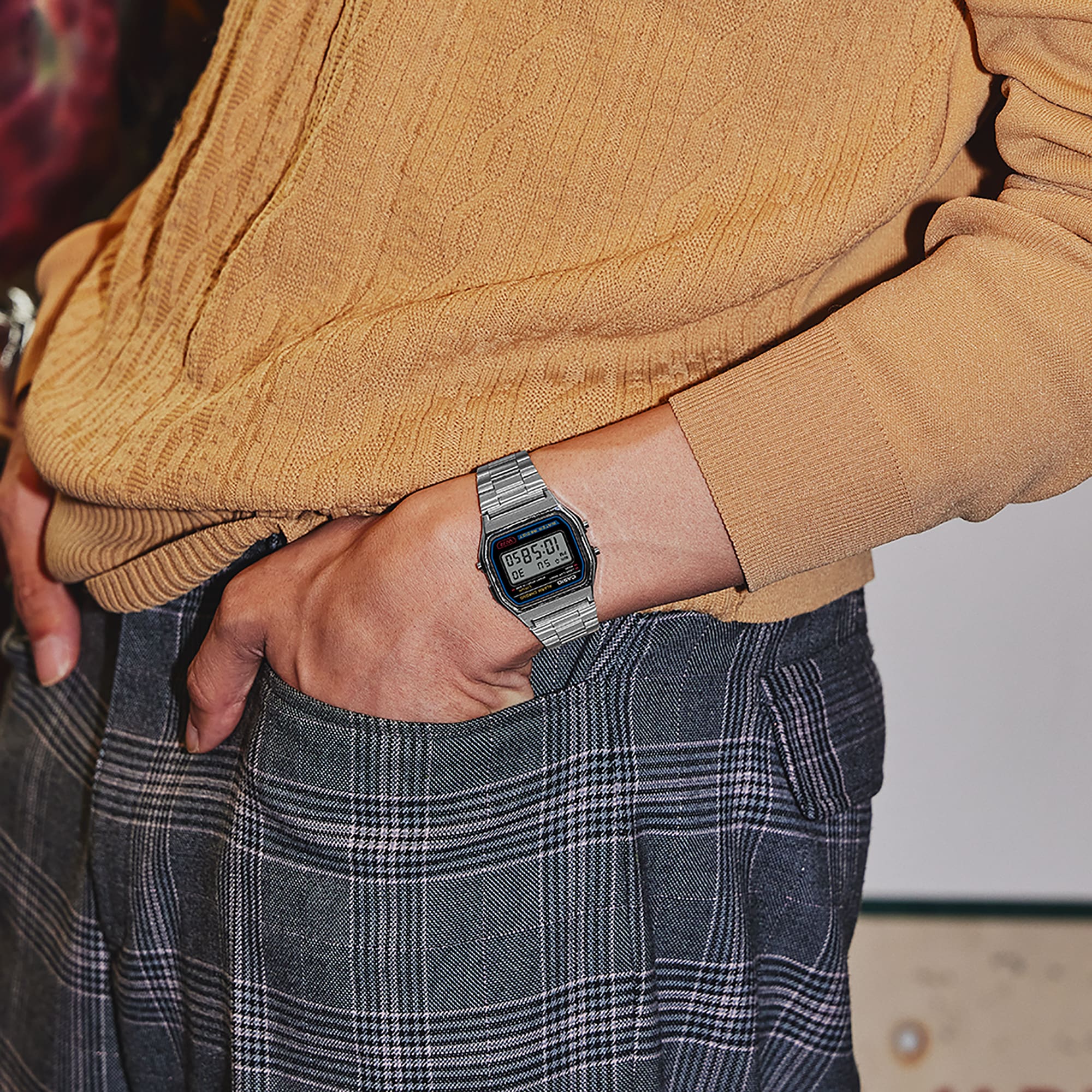
- Adjustable clasps. Some steel bracelets adjust at the clasp. The Casio A158WA-1A, for example, has an adjustable clasp rather than removable links.
- Resin, rubber and leather straps simply use buckle holes.
If a bracelet just isn't comfortable, swapping to a strap is another option. Browse our watch bands, including the Hirsch range, and check your watch's lug width before you buy.
When to leave it to a professional
- Your warranty says adjustments must be done by the brand's service centre.
- The watch is valuable, plated or highly polished, and a scratch would bother you.
- A screw won't turn, a pin won't budge, or the screw head is already damaged.
- You can't tell which links are removable, or the bracelet uses an unusual system.
A local jeweller or watchmaker can usually size a bracelet while you wait.
Explore watches and bands
Frequently asked questions
How many links should I remove from my watch?
Wear the watch, pinch the spare bracelet together underneath your wrist and count the links you can fold away while it still sits comfortably. As a guide, you should be able to slide one finger under the bracelet. Remove one link fewer than you think if you're unsure, because a bracelet that is too tight is harder to fix than one that is slightly loose.
Which side should I remove watch links from?
Take links from both sides so the watch head stays centred on your wrist. If you need to remove an odd number, take the extra link from the 6 o'clock side, which puts the clasp slightly towards the underside of your wrist, where it's more comfortable.
Can I remove watch links without a tool?
Not safely. Screw links need a screwdriver that fits the slot exactly, and pin links need a pin pusher or a thin punch. Improvised tools such as pins, nails or kitchen knives slip easily and scratch the bracelet, so a basic watch link removal kit or a visit to a jeweller is the better option.
Will removing links void my watch warranty?
It depends on the brand. Some manufacturers say bracelet adjustment should be done by their own service centres or trained staff, and that damage caused by anyone else isn't covered. Check your warranty terms before you start, and if in doubt, have a jeweller or watchmaker do it.
What if my bracelet doesn't have removable links?
Some bracelets adjust at the clasp instead. Mesh bracelets usually have a sliding clasp that you unlock and move along, and some steel bracelets, such as the one on the Casio A158WA, have an adjustable clasp. Many clasps also have small spring-bar holes for fine adjustment.
Should I keep the links I remove?
Yes. Keep them in a labelled bag with any loose pins or collars. You'll need them if your wrist size changes, if you want to resize the watch for someone else, or if you sell the watch later.
Authorised Retailer
Why buy your watch from Watch Direct?
We've been an authorised Australian watch retailer since 2011. Every watch comes with the manufacturer's warranty, free standard shipping Australia-wide and 30-day returns.
Shop Watch Bands → Shop Men's Watches → Shop Women's Watches →